

Bathroom renovations are often judged by the quality of finishes, but the most successful projects begin with improving the way a space functions. This Sydney bathroom renovation demonstrates how thoughtful planning, simplified design choices, and strategic use of materials can completely transform a narrow and outdated bathroom into a bright, contemporary space without increasing its footprint.
Projects like this are increasingly common throughout Sydney suburbs including Chatswood, Lane Cove, North Ryde, Epping, Ryde, Hornsby, Artarmon, Willoughby and the wider North Shore, where many older homes contain long, narrow bathrooms originally designed decades ago. These spaces often suffer from poor natural light distribution, bulky fittings, visual clutter and inefficient layouts that make the room feel smaller than it actually is.
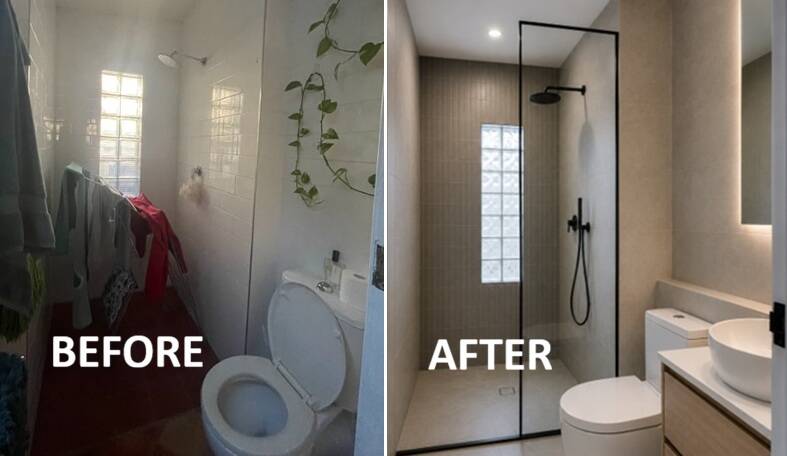
The Original Bathroom: Functional but Visually Constrained
The existing bathroom featured a very traditional layout with white wall tiles, dark flooring and minimal visual separation between different functional areas. While the room provided the basic necessities, several design elements contributed to a cramped appearance.
The most obvious issue was the visual clutter created by the combination of laundry drying racks, exposed fixtures and multiple competing surfaces. The shower area lacked clear definition, while the darker floor colour absorbed natural light and made the room feel narrower.
Although the glass block window at the end of the room provided a useful source of daylight, much of that light was lost due to the surrounding finishes and the overall arrangement of fittings. The result was a bathroom that appeared longer, darker and less inviting than its actual dimensions.
Reimagining the Layout
One of the most significant changes in the renovation was the introduction of a frameless walk-in shower screen.
In many older Sydney bathrooms, enclosed shower cubicles or heavy framed screens can interrupt sightlines and create visual barriers. By replacing these with a single frameless glass panel, the renovated bathroom immediately feels more open. From the doorway, the eye can travel uninterrupted to the rear wall, making the room appear significantly larger.
This design approach is particularly effective in narrow bathrooms where every visual obstruction reduces the perceived size of the space. The frameless shower screen creates a sense of continuity while still providing practical water containment.
The shower area itself was carefully integrated into the overall design rather than appearing as a separate enclosure. This helps create a seamless flow between the wet and dry zones while maintaining a clean architectural appearance.
The Impact of Light-Coloured Large Format Tiles
Another major contributor to the transformation is the use of large-format porcelain tiles in soft neutral tones.
Large tiles have become increasingly popular in Sydney bathroom renovations because they reduce the number of grout lines visible across walls and floors. Fewer grout joints result in a cleaner visual appearance and help make smaller rooms feel more spacious.
The light-coloured tile selection reflects natural and artificial light throughout the room. Instead of absorbing light like the original darker flooring, the new surfaces brighten the entire space and enhance the sense of openness.
For many bathroom renovations across Sydney's North Shore and Inner West, neutral colour palettes remain a preferred choice because they create a timeless appearance while complementing a wide variety of home styles.
Creating a Feature Without Overcomplicating the Design
While simplicity dominates the overall design, the renovation introduces subtle visual interest through the use of vertical feature tiles within the shower area.
The textured feature wall creates depth and contrast without overwhelming the space. Rather than relying on multiple colours or complicated patterns, the design uses texture and orientation to draw attention naturally towards the rear of the room.
This approach is increasingly common in modern bathroom design because it provides visual character while maintaining a calm and uncluttered aesthetic.
Importantly, the feature wall also helps frame the glass block window, turning a functional source of daylight into an architectural focal point.
Better Use of Natural Light
Natural light plays a crucial role in how spacious a bathroom feels.
In the original bathroom, the available daylight struggled to illuminate the room effectively. Following renovation, the lighter finishes, frameless glass and simplified design allow sunlight from the glass block window to travel further into the space.
The result is a brighter environment throughout the day and reduced reliance on artificial lighting.
For Sydney homeowners renovating older properties, maximising existing natural light is often one of the most cost-effective ways to improve both comfort and visual appeal.
Floating Vanity Design and Improved Floor Visibility
The introduction of a floating vanity is another subtle but highly effective design decision.
Traditional floor-mounted vanities can visually interrupt floor space and create a heavier appearance. By lifting the vanity off the floor, more of the tiled surface remains visible, which helps the room feel larger.
The timber-look cabinetry introduces warmth and balance to the otherwise neutral palette. This combination of natural texture and modern finishes has become a defining feature of contemporary bathroom renovations throughout Sydney.
In addition to visual benefits, floating vanities also make cleaning easier by providing unobstructed access beneath the cabinetry.
Wall-Hung Fixtures and Space Efficiency
The renovation incorporates streamlined fixtures that minimise visual bulk.
The wall-faced toilet integrates neatly into the design and contributes to a cleaner appearance. Every element has been selected to reduce unnecessary projections and maintain simple lines throughout the room.
This design philosophy is particularly important in compact bathrooms where even small details can influence how spacious the room feels.
Rather than filling the space with decorative elements, the renovation focuses on achieving balance through proportion, alignment and material selection.
The Modern Bathroom Trend Across Sydney
Many homeowners undertaking kitchen, bathroom and home renovation projects across Sydney are moving towards similar design principles.
Current renovation trends favour:
- Open and uncluttered layouts
- Frameless shower screens
- Large-format porcelain tiles
- Floating vanities
- Recessed or backlit mirrors
- Neutral colour palettes
- Integrated storage solutions
- Improved natural light utilisation
These features are particularly suited to older homes in suburbs such as Chatswood, Lindfield, Killara, Pymble, Wahroonga and Lane Cove, where original bathrooms often require significant modernisation while maintaining practicality for everyday use.
The Result: A Bathroom That Feels Larger Without Expanding
Perhaps the most impressive aspect of this renovation is that the perceived increase in space was achieved without altering the room's overall dimensions.
Through careful layout planning, improved sightlines, strategic material choices and a restrained design approach, the renovated bathroom feels significantly larger, brighter and more functional than the original.
This project demonstrates that successful bathroom renovation is not necessarily about adding more features. Instead, the greatest improvements often come from simplifying the design, enhancing natural light, reducing visual clutter and creating a stronger connection between every element within the room.
For homeowners considering kitchen, bathroom and home renovation projects in Sydney, this transformation highlights how thoughtful design decisions can dramatically improve both the appearance and usability of existing spaces while maintaining a timeless and contemporary aesthetic.
Add comment
Comments